


Despite fears by critics that marijuana legalization would lead to sharp increases in problematic use, newly published data from the federal Substance Abuse and Mental Health Services Administration (SAMHSA) shows that states where cannabis sales remained illegal typically had the highest rates of treatment admissions for the drug.
The data, which was published last week and covers 2021, show admissions to substance use treatment services among people aged 12 and older who go to state-licensed facilities. All told, the SAMHSA report presents findings from nearly 1.5 million admissions nationwide over the course of the year.
Of all the tallied admissions nationwide in the new Treatment Episode Data Set (TEDS), 10.2 percent were for marijuana or hashish as the primary substance, according to the SAMHSA data. That’s the fourth most common substance after alcohol (34.8 percent of all admissions), heroin (20.2 percent) and methamphetamine (13.5 percent). It’s just above “other opiates/synthetics” such as pain medications or fentanyl (9.1 percent) and cocaine (5.6 percent).
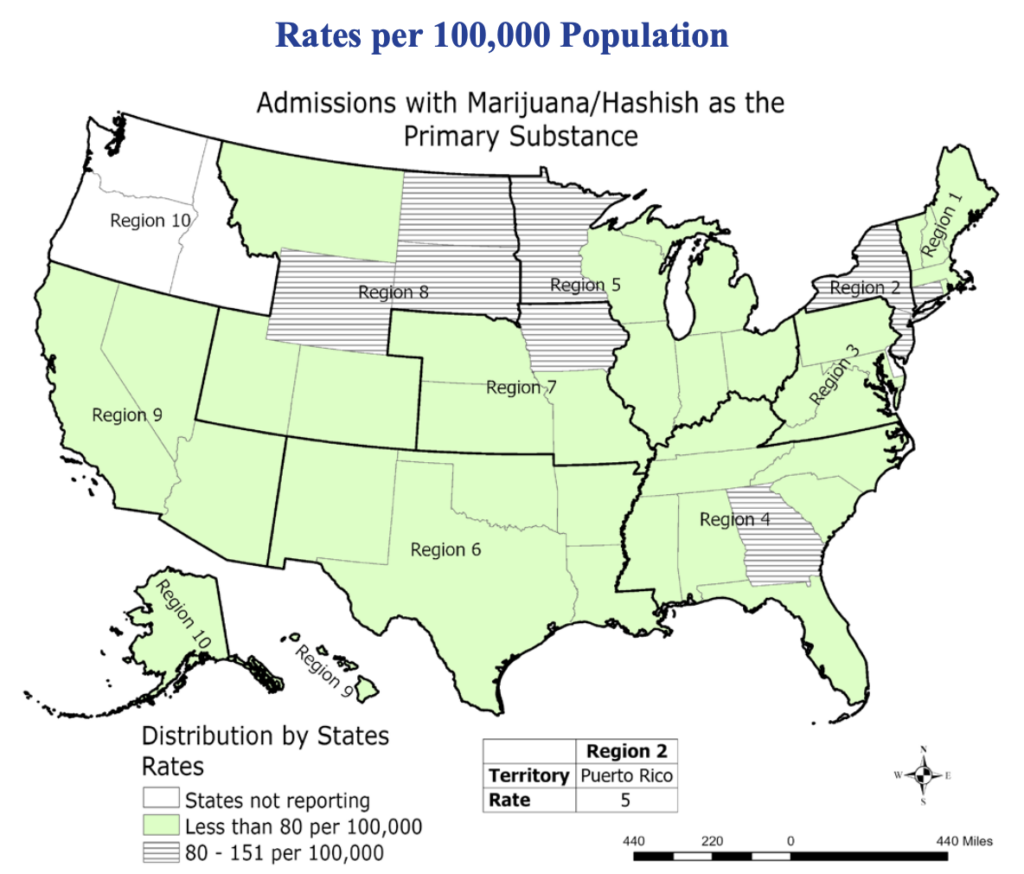
In terms of states with the highest admissions rates where marijuana was the primary substance, on a per capita basis, the top 10 states were South Dakota (151 per 100,000 residents), Iowa (144), Connecticut (141), South Carolina (119), Minnesota (110), New York (95), Wyoming (85), Georgia (84), North Dakota (81) and New Jersey (80).
Substance Abuse and Mental Health Services Administration
While all those states except South Carolina and Wyoming permitted medical marijuana use, none of the top 10 states had legal recreational sales at the start of 2021. New York, New Jersey and Connecticut all legalized adult-use cannabis at some point in 2021, but retail sales didn’t begin until subsequent years.
The states with the lowest rates of admissions primarily for marijuana, meanwhile, were New Hampshire (2 per 100,000 residents), New Mexico (3), West Virginia (3), Montana (4), Puerto Rico (5), Hawaii (10), Arizona (15), Illinois (16), Maine (15), Massachusetts (21) and Pennsylvania (21).
Notably, two states where recreational marijuana sales were legal in 2021—Washington State and Oregon—did not report figures for the SAMHSA report.
Treatment admissions overall were down nationally between 2020 and 2021, during the height of the coronavirus pandemic.
As noted by the prohibitionist group Smart Approaches to Marijuana (SAM), admissions for cannabis treatment in 2021 fell by more than 10,000 since the year before, dropping from 141,091 to 129,343—even as more states enacted legalization. Proportionally, treatment admissions for heroin fell by a larger degree over the same period.
– Admissions for heroin as the primary substance decreased from 301,067 to 255,401;
– Admissions for marijuana as the primary substance decreased from 141,091 to 129,343;
– Admissions for cocaine as the primary substance decreased from 73,394 to 70,456; and— SAM (@learnaboutsam) December 1, 2023
While the admissions numbers provide some indication of substance use disorders, they’re a messy measurement. Other factors affecting treatment admissions—such as sufficient space and resources, as well as how people are referred to treatment—also impact who receives services and for what substances.
Substance Abuse and Mental Health Services Administration (SAMHSA)
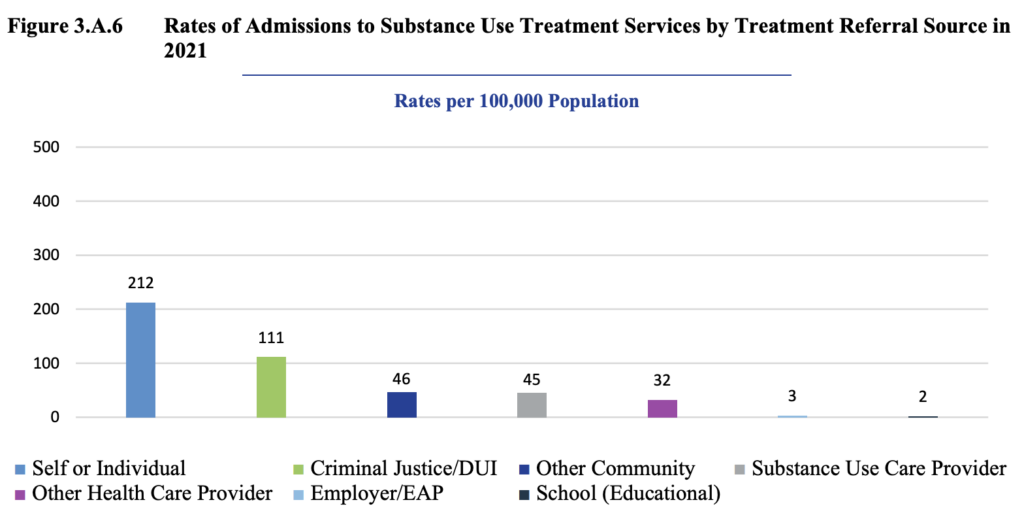
For example, the most common way for people to be referred to treatment in 2021 was “self or individual.” But the second-most common was through the criminal justice system, and procedures for referring defendants to drug treatment vary significantly by state.
A study published in September that was based on SAMHSA data, for example, found that referrals for marijuana-related treatment declined more rapidly after states legalized cannabis, a trend authors said was “likely due to falling cannabis-related arrests” among people 18 to 24 years old.
That study, which looked at data from 2008 to 2019, found that criminal justice referrals to treatment for cannabis use disorder are already falling nationally—both proportionally and in terms of raw numbers—even in states where marijuana isn’t legal. But in states that legalized marijuana for adults, the proportion of referral rates from the criminal justice system fell faster after legalization.
While that trend indicates fewer admissions fueled by the drug war, it also worried the researchers, who said admissions rates were falling even as risk factors for problem marijuana use were rising. Rather than seek to increase criminal justice referrals, however, the report recommended that primary care physicians and other healthcare professionals play a greater role in recognizing cannabis use disorder and referring people to treatment.
In a separate study published in August, researchers found that referrals to foster care also fell after marijuana legalization—but only following the adoption of medical cannabis laws. States that legalized adult-use marijuana, that study found, saw “no corresponding change in the number of foster care entries related to parental or teenage drug abuse relative to control states.” Drug misuse is the second most common reason that a child is placed into foster care.
While that study didn’t identify a meaningful link between adult-use legalization and foster care drug misuse cases, a report published last year did. Researchers at the University of Mississippi found that recreational legalization was associated with at least a 10 percent decrease in foster care admissions on average, including reductions in placements due to physical abuse, neglect, parental incarceration and misuse of alcohol and other drugs.
Another study published earlier this year found that marijuana is “significantly” associated with reduced opioid cravings for people using them without a prescription, suggesting that expanding access to legal cannabis could provide more people with a safer substitute.
Photo courtesy of Martin Alonso.
The post States Where Marijuana Is Illegal Typically See Higher Rates Of Treatment Admissions, Federal Study Says appeared first on Marijuana Moment.


 Prefiled New Hampshire Bills Would Allow Medical Marijuana Homegrow And Add Eating Disorders As Qualifying Conditions