


A senator in South Carolina has prefiled a bill for the 2025 session that would legalize medical marijuana in the state. The legislation, from Sen. Tom Davis (R), brings back into play a proposal that passed the Senate last legislative session but was never taken up in the House.
Davis told local reporters this week that cannabis “can be a therapeutic benefit in many respects, and a lot less intrusive way than opioids or the pharmaceuticals.”
The new bill, S.53, would create a medical marijuana system that’s highly regulated, the sponsor said, according to local CBS affiliate WSPA 7 News. It will be considered by lawmakers in the coming legislative session, which kicks off in mid-January.
“It requires doctors in patient authorization, doctor supervision,” Davis said of the legalization plan. “It requires pharmacists to dispense it. It is a very conservative bill, because that’s what South Carolinians want.”
Davis did not immediately respond to Marijuana Moment’s request for comment.
As introduced, the legislation would allow patients to access medical marijuana from “therapeutic cannabis pharmacies,” which would be licensed by the state Board of Pharmacy. Individuals would need to receive a doctor’s recommendation for the treatment of certain qualifying conditions, which include several specific ailments as well as terminal illnesses and chronic diseases where opioids are the standard of care.
It appears to be largely similar to S.423, which Davis introduced during South Carolina’s last legislative session. Passed by the Senate in February, that bill languished in the House for weeks until it was first taken up in committee in April. Ultimately, however, the chamber never voted on the bill.
“I do think this was a worthwhile effort. It certainly isn’t time wasted,” Davis said at the time. “We learned a lot today and got some good information.”
Advocates applauded Davis’s introduction of the new bill this week.
“We sincerely hope that 2025 is the year that the South Carolina General Assembly finally passes this legislation that a supermajority of South Carolinians support,” Kevin Caldwell, Southeast legislative manager at the group Marijuana Policy Project, told Marijuana Moment in an email. “The Palmetto State is very conservative and I believe this legislation addresses the concerns that opponents have voiced over the last decade as well as meeting the needs of the tens of thousands of potential patients that have been advocating for its passage.”
“We will be doing everything in our power to make this a reality in 2025,” Caldwell added.
Among the public, medical marijuana legalization enjoys overwhelming bipartisan support in the state, with a poll in April finding that 93 percent of Democrats, 74 percent of Republicans and 84 percent of independents back the reform.
Here are the main provisions of the bill, S.53:
- “Debilitating medical conditions” for which patients could receive a medical cannabis recommendation include cancer, multiple sclerosis, epilepsy, post-traumatic stress disorder (PTSD), Crohn’s disease, autism, a terminal illness where the patient is expected to live for less than one year and a chronic illness where opioids are the standard of care, among others.
- The state Department of Public Health and Board of Pharmacy would be responsible for promulgating rules and licensing cannabis businesses, including retailers that would need to have a pharmacist on-site.
- A “Medical Cannabis Advisory Board” would be established, tasked with adding or removing qualifying conditions for the program.
- The legislation would sunset five years after the first legal sale of medical cannabis by a licensed facility in order to allow lawmakers to revisit the efficacy of the regulations.
- The bill does not include language prescribing a tax on medical cannabis sales, unlike a past proposal from Davis. The inclusion of tax provisions resulted in the House rejecting that earlier bill because of procedural rules in the South Carolina legislature that require legislation containing tax-related measures to originate in that body rather than the Senate.
- Smoking marijuana and cultivating the plant for personal use would be prohibited.
- Doctors would be able to specify the amount of cannabis that a patient could purchase in a 14-day window, or they could recommend the default standard of 1,600 milligrams of THC for edibles, 8,200 milligrams for oils for vaporization and 4,000 milligrams for topics like lotions.
- Edibles couldn’t contain more than 10 milligrams of THC per serving.
- There would be packaging and labeling requirements to provide consumers with warnings about possible health risks. Products couldn’t be packaged in a way that might appeal to children.
- Patients could not use medical marijuana or receive a cannabis card if they work in public safety, commercial transportation or commercial machinery positions. That would include law enforcement, pilots and commercial drivers, for example.
- Local governments would be able to ban marijuana establishments from operating in their area and could set rules on policies like the number of cannabis businesses that may be licensed and hours of operation.
- Lawmakers and their immediate family members could not work for, or have a financial stake in, the marijuana industry until July 2029, unless they recuse themselves from voting on the reform legislation.
- The Department of Public Health would be required to produce annual reports on the medical cannabis program, including information about the number of registered patients, types of conditions that qualified patients and the products they’re purchasing and an analysis of how independent businesses are serving patients compared to vertically integrated companies.
The state Senate passed an earlier version of the legislation in 2022, but it stalled in the opposite body over a procedural hiccup.
This past session, some opponents of legalization said they knew of people whose lives were destroyed by cannabis use, for example as the result of suicidal ideation. Others spoke against the medical marijuana proposal on religious and family-values grounds.
“We know that from a biblical perspective that a being involved in hallucinogenic drugs is a sinful behavior,” Steve Pettit, the president of the Palmetto Family Council, told lawmakers this past spring.
—
Marijuana Moment is tracking more than 1,500 cannabis, psychedelics and drug policy bills in state legislatures and Congress this year. Patreon supporters pledging at least $25/month get access to our interactive maps, charts and hearing calendar so they don’t miss any developments.
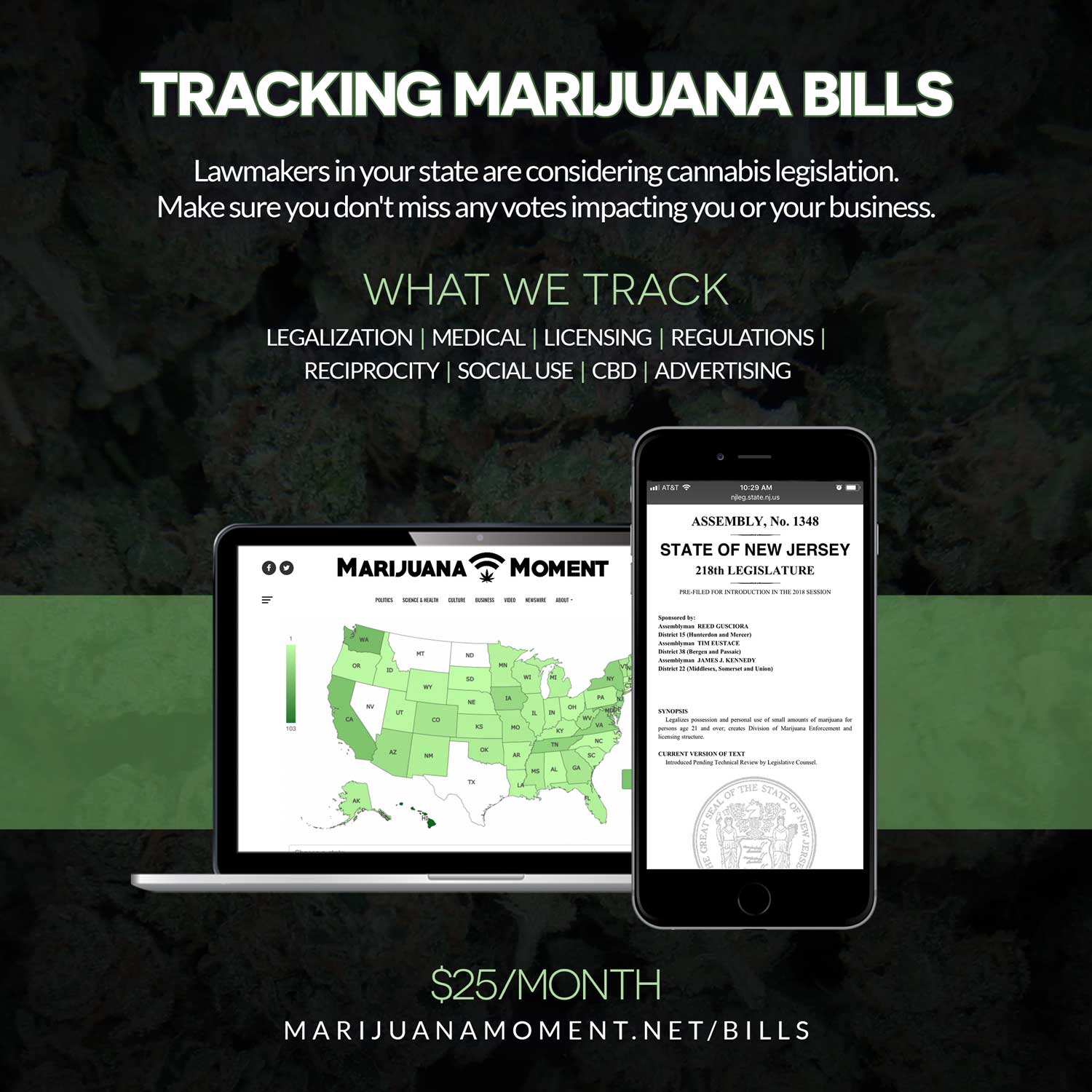
Learn more about our marijuana bill tracker and become a supporter on Patreon to get access.
—
When senators began debating the medical marijuana legislation in February, the body adopted an amendment that clarifies the bill does not require landlords or people who control property to allow vaporization of cannabis products.
As debate on the legislation continued, members clashed over whether the current version of the legislation contains major differences from an earlier iteration that the body passed in 2022.
Certain lawmakers have also raised concerns that medical cannabis legalization would lead to broader reform to allow adult-use marijuana, that it could put pharmacists with roles in dispensing cannabis in jeopardy and that federal law could preempt the state’s program, among other worries.
After Davis’s Senate-passed medical cannabis bill was blocked in the House in 2022, he tried another avenue for the reform proposal, but that similarly failed on procedural grounds.
The lawmaker has called the stance of his own party, particularly as it concerns medical marijuana, “an intellectually lazy position that doesn’t even try to present medical facts as they currently exist.”
The post South Carolina Senator Files Bill To Legalize Medical Marijuana In 2025 As An Alternative To Opioids For Patients With Pain appeared first on Marijuana Moment.


 Biden pushed for more cannabis clemency (Newsletter: December 13, 2024)